
- “They go above and beyond for their clients and always have the best interest of their clients in the forefront.”
- “From the first meeting I knew I was in good hands with the Reardon Law Firm.”
- “For piece of mind hire a reputable Attorney and firm. I did, The Reardon Law Firm.”
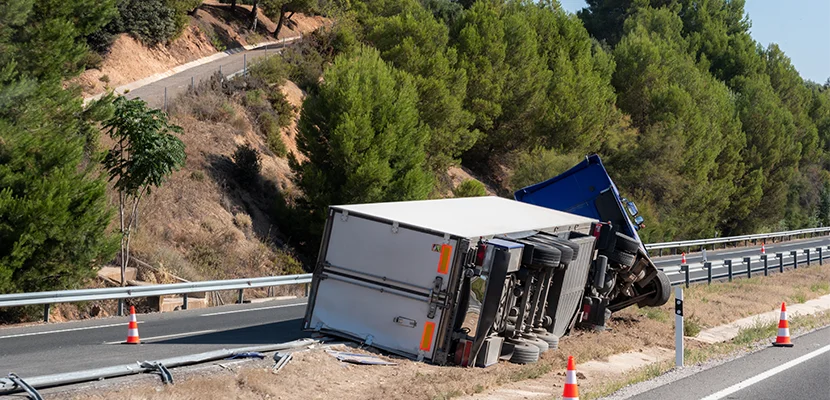
We have said it before in other blogs, but it merits repeating: Semi-truck accidents are often far more severe than regular vehicle crashes. These vehicles weigh up to 80,000 pounds, compared to the average passenger car’s 3,000 pounds. The massive difference in weight and size means that collisions with semis more often involve severe injuries, higher fatality rates and more significant property damage. Understanding the common scenarios of truck crashes and the legal implications can help victims seek justice and compensation.
Six dangerous scenarios
Here are a few examples of what happens during the semi-truck crash:
- Rollovers: These occur when a truck tips over onto its side or roof. Rollovers are often caused by taking turns too quickly, overloading or uneven cargo distribution. Trucks’ high center of gravity makes them particularly susceptible to this type of accident.
- Jackknife crashes: These happen when a truck trailer swings out to form a 90-degree angle with the cab, resembling a folding knife. Jackknifing can occur due to sudden braking, slippery roads, or improper braking techniques.
- Rear-end collisions: Trucks require a longer distance to stop due to their weight. Rear-end collisions often happen when a truck cannot stop in time to avoid hitting the vehicle in front. These accidents can also occur when a smaller vehicle crashes into the back of a truck, sometimes resulting in underride accidents where the smaller vehicle slides under the truck’s trailer.
- Head-on collisions: Among the most deadly collisions, these occur when a truck collides with another vehicle head-on, perhaps due to swerving out of their lane into oncoming traffic. Causes include driver fatigue, distraction, or loss of control.
- Sideswipe collisions: These occur when a truck and another vehicle are traveling parallel, and one vehicle swerves or drifts into the other. Sideswipes can cause vehicles to lose control and result in secondary collisions.
- Wide turn accidents: Trucks need extra space to make wide turns. Accidents can happen when a truck swings wide to the left to make a right turn, colliding with vehicles in adjacent lanes.
Determining fault in truck accidents
Determining fault in truck accidents can be complex, as multiple parties may be involved. The truck driver may be at fault for fatigue, distraction, speeding or impaired driving. However, the trucking company can also be liable if they fail to maintain the truck properly, enforce unrealistic schedules that lead to driver fatigue or hire unqualified drivers. In some cases, poor road conditions, inadequate signage or faulty traffic signals can make the municipality responsible for accidents. Additionally, if a mechanical failure or defect causes a truck accident, the victim can possibly hold the truck manufacturer or its parts liable. Each scenario requires a thorough investigation to determine the exact cause and responsible party.
Securing damages with a personal injury claim
Truck crash victims and their families can pursue personal injury lawsuits to secure compensation for various damages. The damages could include lost wages, related medical expenses, compensation for pain and suffering and property damage reimbursement. By understanding the cause and the avenues for compensation, victims can better navigate the complexities of personal injury claims and secure the financial support they need to recover and move forward.
